
Lipedema + GlP-1s: What you need to know
GLP-1s are not a cure for lipedema. But for some of us they are a useful tool that may help manage inflammation and improve quality of life.

You have probably heard about Ozempic, Wegovy and Zepbound by now. They are everywhere. But what does the research actually say about GLP-1s and lipedema specifically? Let me break it down.

First, what is a GLP-1?
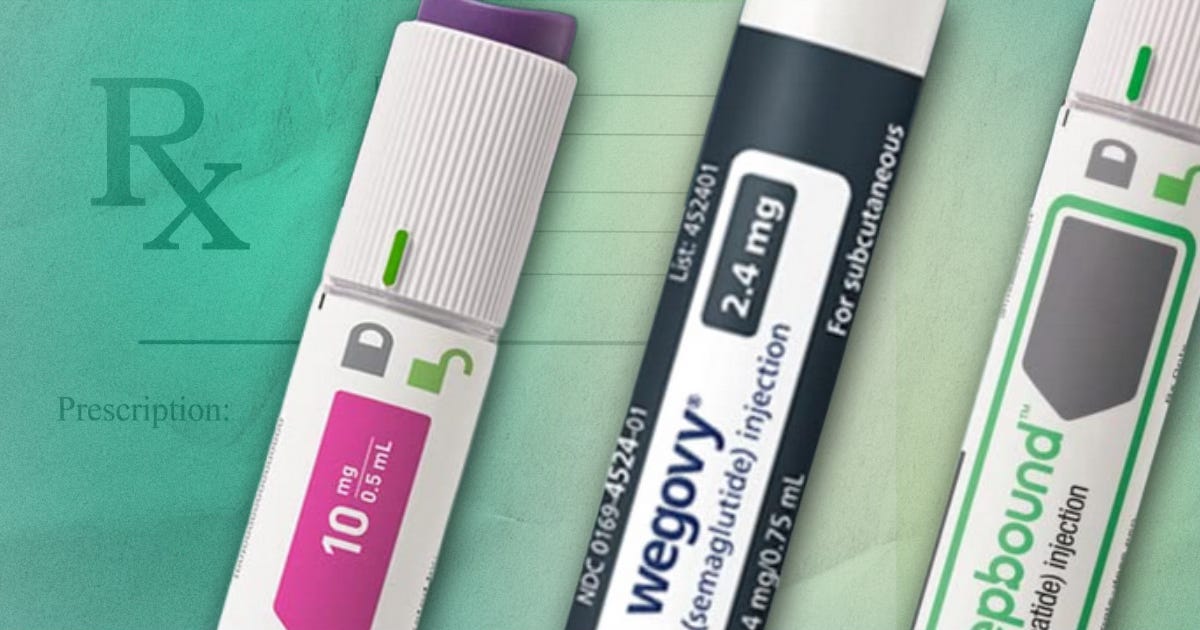
GLP-1 stands for glucagon-like peptide-1. These are a class of medications that were originally developed for type 2 diabetes and have since become widely used for weight management. The most well-known ones are semaglutide — sold as Ozempic for diabetes and Wegovy for weight loss — and tirzepatide, sold as Mounjaro for diabetes and Zepbound for weight loss. They work by reducing appetite, slowing digestion and improving how your body processes blood sugar. A systematic review of studies published between 2018 and 2025 found that GLP-1 medications demonstrated sustained weight loss and favorable metabolic benefits across a wide range of patients.
Do they cure lipedema?
I wish! But no. GLP-1s do not dissolve or remove lipedema fat. Lipedema fat is biologically different from regular fat — it is fibrotic, inflammatory and resistant to conventional weight loss.
So, what can they do for lipedema?
This is where it gets interesting. A clinical study published in 2025 examined five women with lipedema and insulin resistance treated with a GLP-1 medication. The drug was shown to reduce symptoms and signs of lipedema, even in patients who did not lose significant body weight.
A 2025 peer-reviewed study published found that tirzepatide specifically shows promising potential as a disease-modifying therapy for lipedema — with research suggesting it may reduce chronic inflammation, shift immune cells from a pro-inflammatory to an anti-inflammatory state and target key mechanisms of the condition including fat cell enlargement and fibrosis.
What is tirzepatide exactly?
Tirzepatide is the drug behind Mounjaro and Zepbound. What makes it different from semaglutide, the drug behind Ozempic and Wegovy, is that it works on two receptors instead of one. Semaglutide only targets the GLP-1 receptor. Tirzepatide targets both GLP-1 and GIP receptors.
That dual action is why researchers believe tirzepatide may have a broader effect on inflammation and fat tissue — and why it is currently the most promising medication in this class for lipedema specifically.
It is what my doctor prescribed me for my lipedema and it has made a real difference in my inflammation. My body, especially my legs, feel less swollen and heavy.
This is a prescription medication.
You cannot just go buy this drug. You need a doctor to prescribe it and you need to have a real conversation about whether it is appropriate for you, your health history and your specific situation.
Please talk to your doctor. And if your doctor is not familiar with lipedema, see if they are receptive and willing to learn. If they are dismissive — find a new one. Having a supportive care team is everything for your lipedema care.
GLP-1s are not a cure for lipedema. But for some of us they are a useful tool that may help manage inflammation and improve quality of life.